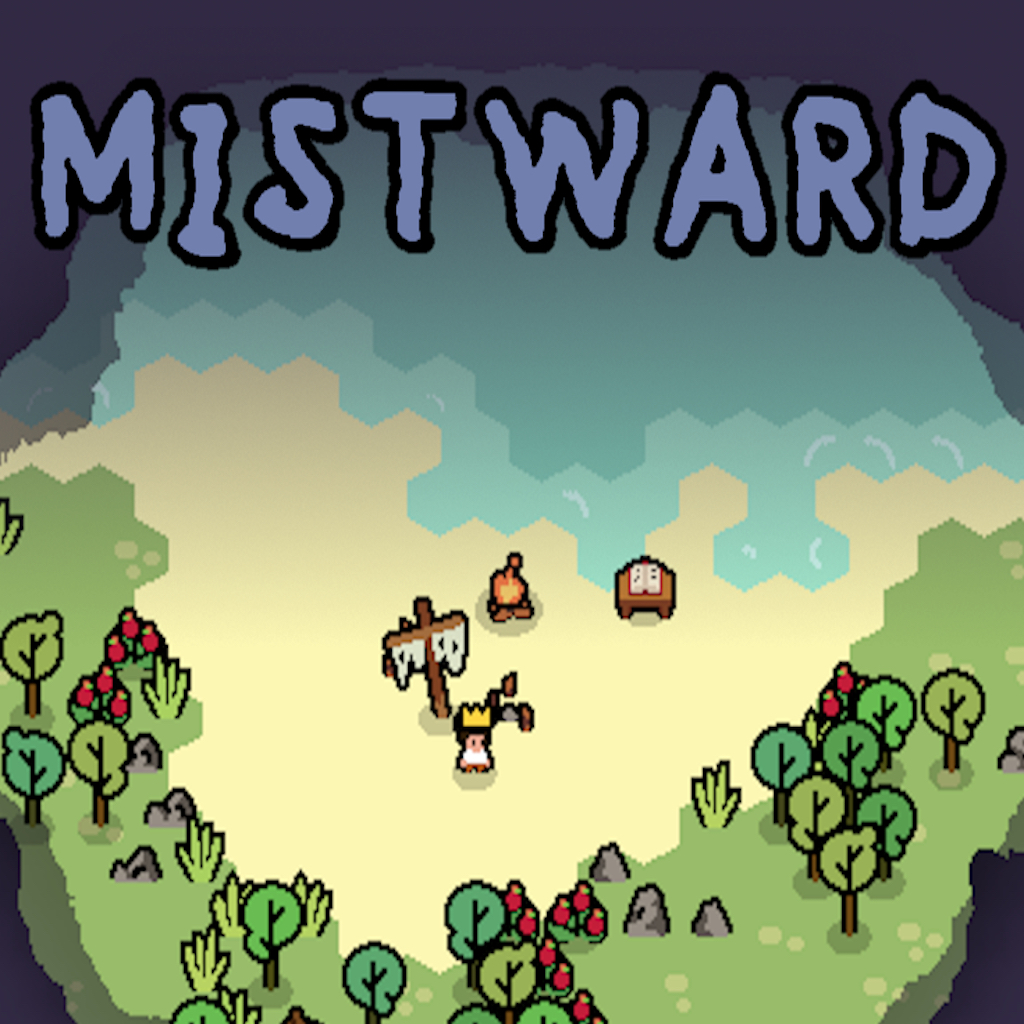
Mistward is an atmospheric survival city-builder that places equal emphasis on planning, restraint, and environmental pressure. Developed and published by Sokpop Collective, Mistward blends familiar colony-management mechanics with a distinctive central threat: a creeping, lethal mist that constantly pushes back against player progress. The result is a game that feels contemplative yet tense, offering satisfaction through optimisation rather than spectacle.
Rather than overwhelming players with complex narrative or excessive systems, Mistward focuses on a single, elegant idea and explores it thoroughly. That focus is both its greatest strength and its most significant limitation.
Premise and Atmosphere
Mistward is set on a mysterious island engulfed by a poisonous mist that slowly encroaches on all unprotected land. This mist damages settlers, halts expansion, and serves as the game’s ever-present antagonist. Your task is simple in concept but demanding in execution: establish a settlement, push back the mist using light, and survive long enough to expand and stabilise.
There is little in the way of traditional storytelling. Instead, Mistward relies on environmental tension to create its identity. The constant visual presence of the mist, combined with the glow of torches, fires, and lamps, reinforces the idea that safety is temporary and must be actively maintained. This creates a strong sense of vulnerability that permeates the entire experience.
While players seeking rich lore or character-driven narratives may find this approach sparse, those who appreciate emergent storytelling will likely find the atmosphere compelling. Every expansion into the mist feels earned, and every failure feels personal.
Core Gameplay Loop
At its core, Mistward revolves around a tightly structured gameplay loop: push back the mist with light, gather resources within the safe zone, use those resources to expand infrastructure, and then repeat. This loop is deceptively simple, but it demands careful planning and constant reassessment.
Light is your primary tool. Fires, torches, and lamps create pockets of safety, but they require fuel and maintenance. Expanding your illuminated territory increases access to resources, but it also increases logistical strain. Food production, fuel supply, and worker allocation all need to scale alongside expansion, and failure to do so can cause rapid collapse.
This dynamic creates a satisfying push-and-pull. Aggressive expansion is tempting, but reckless growth often results in shortages that leave large sections of your settlement exposed to the mist. Conversely, overly cautious play can lead to stagnation, with limited resources slowing progress to a crawl.
Mistward excels at making these trade-offs meaningful. There is rarely a single “correct” decision, only calculated risks and their consequences.
Systems and Management Depth
Mistward blends elements of colony simulation, light automation, and survival strategy. Settlers can be assigned tasks such as gathering resources, constructing buildings, and maintaining light sources. As your settlement grows, managing priorities becomes increasingly important, especially during moments of crisis when fuel runs low or food supplies dwindle.
Automation is present but deliberately limited. While settlers will perform assigned tasks autonomously, players must still intervene regularly to adjust priorities and respond to changing conditions. This keeps engagement high, but it can also become repetitive during longer sessions.
Exploration plays a secondary but important role. Pushing into new biomes unlocks additional resources and opportunities, but also introduces new hazards. Each expansion requires careful preparation, reinforcing the game’s central theme of risk versus reward.
However, Mistward’s systems are not especially deep compared to more complex colony sims. Production chains are relatively straightforward, and once optimal setups are discovered, later stages can feel predictable. The early game is tense and absorbing, but the mid-to-late game sometimes struggles to maintain that same sense of urgency.
Visual Presentation and Audio
Visually, Mistward adopts a charming pixel art style that prioritises clarity and atmosphere. The mist itself is an effective visual tool, clearly defining safe and dangerous areas while also reinforcing tension. Lighting effects play a dual role, serving both aesthetic and mechanical purposes.
The colour palette is restrained but effective, with warm light contrasting against the cold, oppressive mist. While the art style is simple, it is cohesive and readable, which is crucial for a management-focused game.
Audio design is understated but supportive. Ambient sounds and subtle music reinforce the game’s calm yet uneasy tone without becoming intrusive. Sound cues provide useful feedback for key actions, though the audio never takes centre stage.
Interface and Accessibility
Mistward’s interface is functional but not especially forgiving. Basic information is available, but some mechanics lack clarity without experimentation. Task assignment and priority management can feel opaque, particularly for new players unfamiliar with colony simulators.
There is minimal hand-holding, and while tutorials exist, they do not always explain the deeper implications of certain decisions. This design choice aligns with the game’s minimalist philosophy, but it may alienate players who prefer more structured onboarding.
Accessibility options are limited, which may be a concern for some players. Greater customisation in difficulty, UI scaling, or automation controls would significantly improve approachability without compromising the game’s core design.
Difficulty and Pacing
Mistward’s difficulty curve is front-loaded. The early game is tense, demanding careful management and frequent decision-making. Mist encroachment, limited resources, and fragile infrastructure combine to create genuine pressure.
As the game progresses and systems stabilise, that tension gradually diminishes. Once a reliable fuel and food economy is established, the mist becomes more of a logistical obstacle than an existential threat. This shift can make the later stages feel less engaging, particularly for players seeking sustained challenge.
That said, the game never becomes entirely trivial. Mistward remains capable of punishing complacency, especially if players overextend or neglect maintenance.
Replay Value and Longevity
A single playthrough of Mistward can last several hours, depending on playstyle and risk tolerance. Replay value comes from optimisation rather than variation. Players may experiment with different settlement layouts, expansion strategies, or pacing approaches, but the overall structure remains consistent.
For fans of Sokpop Collective’s design philosophy, this focused scope is likely to be a positive. For others, the lack of significant late-game variation may limit long-term appeal.
Final Verdict
Mistward is a thoughtfully designed survival city-builder that succeeds through focus and atmosphere rather than complexity. Its central mechanic — light versus mist — is compelling, well-integrated, and consistently meaningful. While the game’s limited depth and uneven pacing prevent it from reaching genre-defining heights, it delivers a cohesive and satisfying experience within its intended scope.
For players who enjoy methodical planning, environmental pressure, and minimalist strategy design, Mistward offers a memorable and rewarding journey. Those seeking deep automation, rich narrative, or extensive late-game systems may find it lacking.