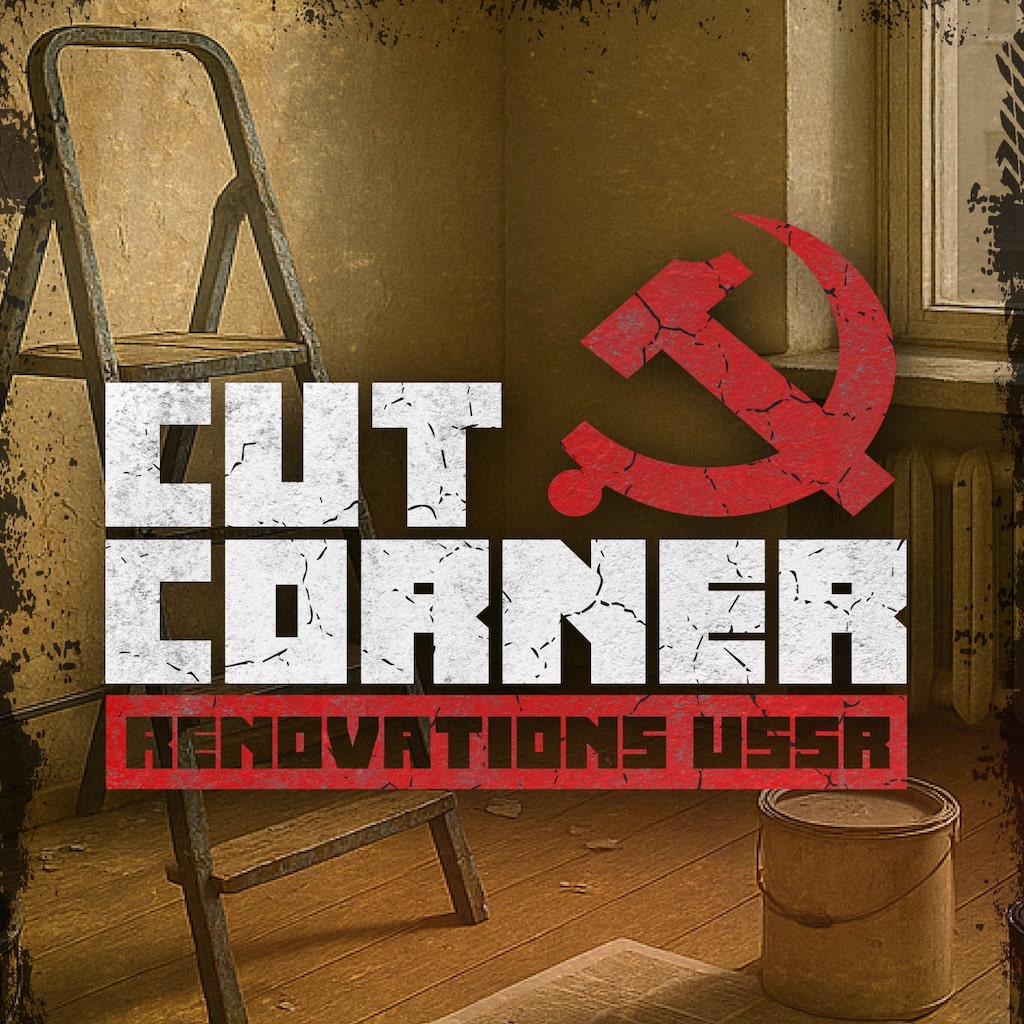
Home renovation simulators usually sell fantasy. Sparkling kitchens. Perfect paint jobs. A satisfying before-and-after transformation worthy of a glossy real estate show.
Cut Corner Renovations USSR throws that fantasy out of a cracked fifth-floor window.
Developed and published by Noodels Games World, this PS4 release (formerly known during development as Low Budget Repair Simulator USSR) takes the increasingly popular “job sim” formula and filters it through the lens of scarcity, improvisation, and dry satire. Instead of luxury remodelling, you’re patching together ageing Soviet-era apartments with limited funds, questionable tools, and whatever scraps you can scavenge from a neighbour’s abandoned toolbox.
It’s gritty. It’s scrappy. And at times, it’s surprisingly clever.
The Premise: Ingenuity Over Perfection
You play as a handyman navigating ageing Eastern Bloc housing blocks inspired by 1970s–80s Soviet architecture. The apartments are in a poor state:
- Wiring sparks behind peeling wallpaper
- Pipes leak into rusty bathtubs
- Floors buckle under decades of neglect
- Walls crack beneath faded propaganda posters
Your job isn’t to make things beautiful — it’s to make them functional. Preferably without going bankrupt.
Each level gives you a limited budget and a list of required repairs. But here’s the twist: you rarely have enough money or the ideal materials to complete everything perfectly. Instead, you must decide where to “cut corners” without failing the job entirely.
That cracked wall? Maybe you can patch it with lower-grade plaster. That broken light fixture? Replace it with a salvaged one that flickers only occasionally.
The game’s design philosophy centres on compromise.
Gameplay: Repair Under Pressure
Mechanically, Cut Corner Renovations USSR follows familiar first-person simulation patterns:
- Interact with tools
- Remove damaged components
- Install replacements
- Patch surfaces
- Rewire systems
Controls are straightforward and controller-friendly on PS4. Tasks are broken into manageable objectives, making the experience accessible even for casual players.
But unlike polished renovation sims, the tension here comes from resource management. Every material purchase eats into your already thin budget. Running out of funds before completing essential repairs results in failure — or at best, a mediocre performance rating.
The strategic element lies in prioritisation.
Do you fully replace dangerous wiring, or patch it just enough to pass inspection? Do you install durable flooring or a cheaper substitute that might satisfy the tenant temporarily?
This constant balancing act gives the game its identity.
Scavenging: Making Do with What You Have
A standout feature is the scavenging system.
Apartments often contain reusable materials hidden in closets, behind cabinets, or in basements. Salvaging these components reduces spending and rewards careful exploration.
It’s oddly satisfying to repurpose an old radiator or reuse wiring segments to complete a task. The act of “making do” becomes central to the experience.
This mechanic transforms the game from a straightforward repair sim into a survival-lite management challenge.
You’re not just fixing homes — you’re surviving an economic reality.
The USSR Aesthetic: Atmosphere Through Imperfection
Visually, the game leans heavily into its Soviet-inspired aesthetic.
Concrete stairwells. Faded wallpaper. Heavy wooden doors. Metal plumbing. The environments feel authentic in tone — neither romanticised nor overly bleak.
Textures emphasise wear and age. Paint chips realistically. Pipes rust convincingly. Lighting in PS4 Pro mode appears slightly sharper and more stable, though not dramatically enhanced.
This isn’t a visually flashy game. It’s grounded, muted, and deliberately utilitarian.
And that works in its favour.
Humour in the Grit
Despite its drab environments, the game isn’t dour.
There’s a dry, satirical undercurrent running through the dialogue and job descriptions. Clients leave amusing notes. Work orders occasionally read like bureaucratic absurdities. The protagonist’s internal monologue sometimes comments on the absurdity of repairing outdated systems with outdated tools.
The humour never becomes slapstick, but it provides a necessary counterbalance to the repetitive labour.
It’s subtle — and surprisingly effective.
Career Progression: From Junior to Senior Craftsman
Beyond individual jobs, the game offers light career progression.
As you successfully complete repairs, you progress from “Junior Craftsman” to higher ranks, unlocking:
- Slightly improved tools
- Access to larger repair contracts
- Better-quality materials
Progression is steady but modest. Don’t expect dramatic upgrades — even advanced tools still feel appropriately limited in the setting.
This restraint reinforces the game’s theme: you’re never truly “luxury-level.” You’re just slightly better at surviving scarcity.
Where It Struggles
While the premise is strong, execution occasionally falters.
Task repetition becomes noticeable after several jobs. Although apartment layouts vary, core objectives (patch wall, fix pipe, replace flooring) recur frequently.
The physics and interaction systems, while functional, lack the polish of higher-budget sims. Objects can feel slightly rigid, and animations occasionally lack smoothness.
There’s also limited customisation. Unlike games such as House Flipper, creative expression is secondary to functionality. Some players may find this restrictive.
Finally, difficulty balancing can feel uneven. Some jobs feel too forgiving, while others punish minor budgeting errors harshly.
A Unique Niche Entry
What ultimately defines Cut Corner Renovations USSR is its commitment to theme.
This isn’t about beautification. It’s about practicality under pressure. It captures a specific tone — the ingenuity required when resources are scarce — and sticks to it consistently.
That dedication gives it personality, even when the mechanics feel repetitive.
For players seeking something different from glossy renovation fantasies, this gritty alternative offers a refreshing change of pace.
Pros & Cons
Pros
- Unique Soviet-era aesthetic
- Clever resource management twist
- Scavenging adds meaningful strategy
- Dry, understated humor
- Accessible, controller-friendly gameplay
Cons
- Repetitive repair tasks
- Limited creative freedom
- Occasional mechanical clunkiness
- Inconsistent difficulty spikes
Final Verdict
Cut Corner Renovations USSR doesn’t aim to be glamorous — and that’s precisely why it works.
By focusing on scarcity, improvisation, and strategic compromise, it carves out a niche identity within the crowded renovation-sim genre. While repetition and technical limitations hold it back from greatness, its thematic consistency and resource-driven gameplay offer something refreshingly grounded.
It may not entirely renovate your expectations of the genre, but it certainly patches in a few clever ideas.